
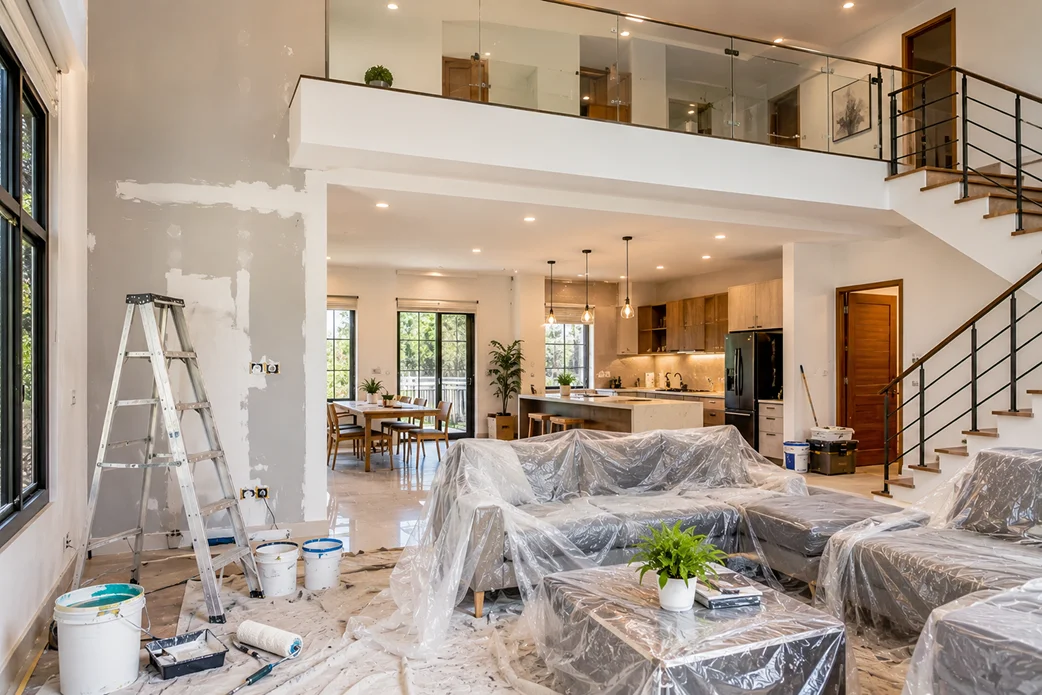
Can You Renovate While Living in the House?
Moving out during a renovation is not always possible or affordable. Many Sydney families renovate while still living at home, and while it can be done well, it takes planning most people don’t think about until they’re already in the middle of it.
Is It Actually Possible?
Yes, in most cases you can live in the house while its under renovation. Whether it’s realistic for your project depends on the scope. A bathroom renovation with one working bathroom left in the house is manageable. A full kitchen and living area renovation with no functioning kitchen for six weeks is a different experience entirely.
The Pros of Staying In
- You save on temporary accommodation: Renting elsewhere during a renovation adds a high cost that many homeowners don’t budget for.
- You keep an eye on progress: Being on-site means you notice issues early and can make quick decisions on variations without delays.
- Less disruption to routines: For families with school-aged kids or pets, staying in familiar surroundings, even a messy version of them, is often easier than relocating.
The Cons of Staying In
- Noise and dust are unavoidable: Even with dust barriers and site management, construction noise during work hours is part of the experience.
- Reduced privacy: Tradespeople will be in and out of your home daily, which takes some adjustment.
- Limited access to key rooms: Depending on the renovation, you may lose use of a kitchen, bathroom, or living space for periods of the project.
- It can extend your patience more than your timeline: The renovation itself may not take longer, but living inside it can make the experience feel longer than it is.
Wondering if your renovation is one you’ll live through comfortably?
Get a disruption timelineTips for Making It Work
Set up a temporary zone early: For kitchen renovations, a simple setup with a bar fridge, microwave, and kettle in another room makes a real difference.
Ask your builder about staging: Many renovations can be sequenced so you retain use of at least one bathroom or a basic kitchen function throughout.
Protect the rest of the house: Ask about dust barriers and floor protection for areas outside the renovation zone, especially if you have young kids or allergies in the household.
Agree on work hours in advance: Confirm start times, especially if you have someone working from home or young children with nap schedules.
Plan for the worst week, not the average week: Every renovation has a peak disruption period, usually demolition or major structural work. Knowing when that’s coming helps you plan around it, rather than being caught off guard.
When It’s Better to Move Out Temporarily
If your renovation involves removing your only kitchen or bathroom for an extended period, has young children or elderly family members in the home, or includes major structural work with safety considerations, temporary accommodation may be worth the added cost, even for a few weeks.
Planning for How You’ll Actually Live.
Living through a renovation is a household question. The right approach depends on your family, your tolerance for disruption, and the scope of the work itself.
With the right planning and a builder who’s upfront about what to expect, staying in your home during a renovation can absolutely work. You just want to go in with clear eyes, not a best-case guess.
Plan Your Renovation & See Whether You Should Stay Or Move Out
Frequently Asked Questions
Living during a full renovation depends on the scope. Partial renovations are usually manageable, while full home renovations involving the only kitchen or bathroom often require temporary accommodation for at least part of the project.
It is not necessarily cheaper to move out during a renovation, but it can reduce stress. The right choice depends on the renovation’s scope, your budget, and your household’s tolerance for disruption.
Reputable builders use dust barriers, protective flooring, and agreed working hours to minimise disruption, though some noise and dust are unavoidable during construction.